Databricks Data + AI Summit 2026, and what it means when your telemetry meets your business context
Arthur Verrez
How Tsuga keeps your telemetry in your own cloud, feeding Databricks Genie and AI investigations with full business context, no copies, no data leaving your boundary.
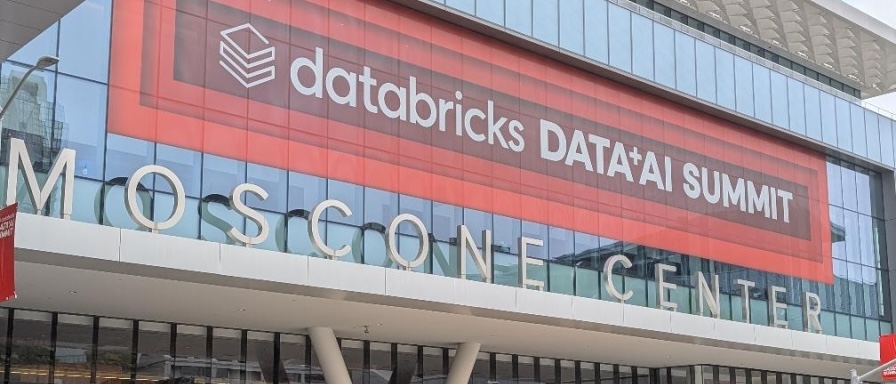 The Data and AI Summit is where much of the year's thinking about data and AI comes together, and the one held last week pointed, for us, in a direction that felt familiar. This is a slightly late account of it. The days since have been full ones, for reasons we will come to, and only now is there room to set down what we took away. The announcements from Databricks, set alongside the way Tsuga keeps observability data inside your own cloud, pointed to a system that can understand your business, see what is happening in production, and help you act on both at the same time.
It helps to start with what an intelligent system actually needs before it can be useful. It needs context, so that it understands what your company means and how the parts connect. It needs a way to act, so that it can do something with that understanding rather than simply describe it. And it needs to sense what is happening across your systems as it happens. The partnership lines up cleanly along those three needs. Databricks brings the context and the means to act. Tsuga brings the senses, which is your telemetry, held in your cloud and available without copies.
That last point is the foundation the rest depends on. Because Tsuga runs inside your environment, your telemetry can feed everything Databricks offers without being moved, mirrored, or duplicated somewhere else first. There is no second copy to pay for and no data leaving your boundary to make the tools work. Your costs track your own infrastructure rather than a separate platform, and the data stays under your control while still being fully available to the systems that need it.
With that in place, the announcements start to connect. Genie One gives your teams a way to ask questions of your data in plain language, and with Tsuga's telemetry sitting beside your business data, those questions can cross what used to be separate worlds. You can look at product usage, cloud cost, revenue, and what your systems are actually doing in one conversation, without the silos that normally keep them apart.
The piece that struck us most was Genie Ontology, together with OntoRank. It builds a current map of what your company actually means, covering ownership, how data flows, and what affects customers. This is the context that investigations have always lacked. An engineer carries a version of it in their head, built up over years, and it goes stale the moment they move on. With that map kept current and placed next to your telemetry, root cause analysis can reason about cause and effect with the meaning of the business attached, rather than working from raw signals alone.
Genie Agents take the next step, which is acting rather than only answering. When a Tsuga monitor fires, an agent can gather the relevant telemetry, draw in the surrounding context, work through what most likely happened, and return with an explanation and a suggested way forward. The value is not the novelty of it. It is that the slow opening of an incident, the part where someone is still working out where to look, now has a running start.
There is more coming in the same spirit. Genie App Builder will let you generate a small application to watch for something and respond to it, created straight from an incident rather than built from scratch afterwards. It points at a future where the response to a problem can become a lasting tool almost as a side effect of handling it.
None of this works at scale without permissions that hold up, and that was addressed too. Investigating across services is only safe if the system can respect what each team should keep private while still letting you see the whole picture. Tsuga and Databricks now line up on access controls, so an investigation can stay broad while access stays scoped to what each person and each agent is allowed to see. At enterprise scale this is a requirement rather than a refinement.
The same logic reaches into security and what Databricks are delivering with Lakewatch. A large share of security signals is, in the end, observability data, and it tends to live where your telemetry lives. Keeping it inside your own cloud and bringing it into the same place as everything else means your teams can work with it directly, without sending it elsewhere first and without losing sight of where it came from.
The thread running through all of it is ownership. Your data stays yours, the tools come to it rather than pulling it away, and the value compounds precisely because nothing has to leave. You can ask anything across your observability and your business data, investigate with the full context of your company, and let the system take the first steps toward a fix. That is the world Tsuga was built for, and DAIS 2026 made it feel a good deal closer.
There is one more thing, and it is the reason this account took a moment to arrive. The week did not end at the summit. On the back of DAIS we closed our Series A, and the days since have been spent on the work that follows from that rather than on writing about the week itself. We have kept the attention on our customers throughout, and that does not change now. What it does mean is that there are some new product announcements not far off, and we are looking forward to sharing them soon. For now we are grateful to be building alongside the Databricks team, and glad about where this is heading.